
This is Boondoggle, the newsletter about how corporations rip off our states, cities, and communities, and what we can do about it. If you’re not currently a subscriber, please click the green button below to sign up. Thanks!
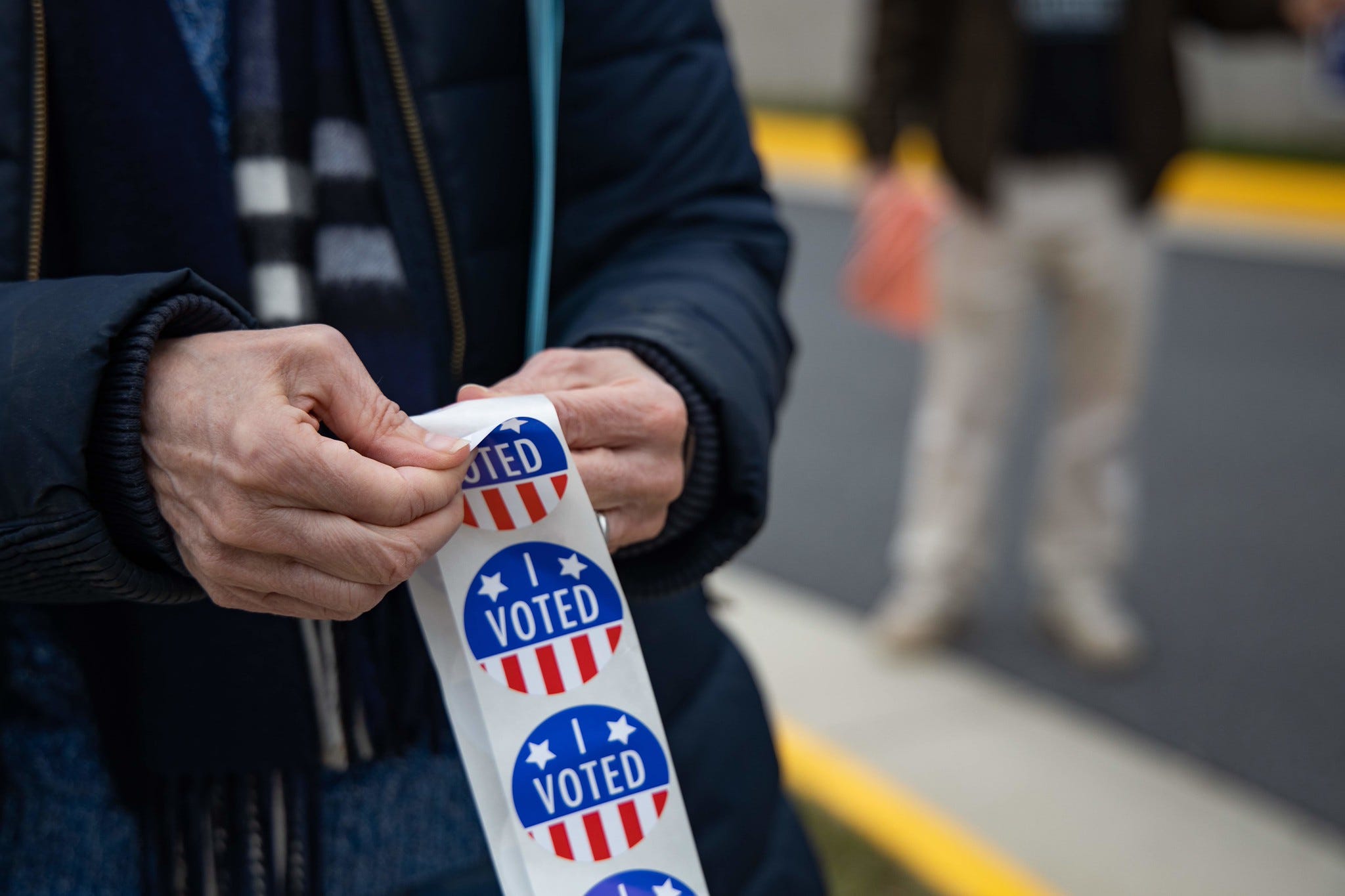
We’re less than a month out from the 2026 election, and while most of the focus in the political press and on TV is naturally going to fall on whether or not Congress switches hands for the final two years of the Trump administration, there are loads of down-ballot races that will have an impact on states, cities, and counties across the country. And, depending on where you live, there are ballot questions, where policy proposals get put directly to voters — sometimes with positive effect, to be sure, but sometimes with the potential for disaster.
For example, in Arkansas, a question on the ballot provides a textbook case of how legislators and corporate interests use bland language and faux competitiveness concerns to open the public money spigot and enrich themselves. The gameplan being employed there is instructive not just for Arkansas voters, but anyone else concerned about corporate accountability and the misuse of public resources.
Issue Three, as it’s called, was referred to the ballot by the Arkansas state legislature, which is able to refer up to three amendments to the state constitution each election cycle. Its title is “Authorizing the General Assembly to Provide for the Creation of Economic Development Districts Within Cities, Counties, or Cooperative Areas to Promote Economic Development Within the Economic Development District.”
That’s some word salad, so in layman’s terms, approval of the ballot question would remove from the Arkansas constitution its current restriction on the creation of local “economic development districts,” wherein tax dollars are rerouted or plowed into specific businesses that locate within the district.
Though the details and funding mechanisms of these districts change from place to place, the broad outlines are generally the same all over the country: Businesses within the district receive special tax treatment or rebates not available to others, in the name of job creation or economic diversification or whatever else pols claim to be promoting that day. This is one of the many avenues through which economic development funds — which are the billions of dollars states and localities spend on corporate subsidy deals annually — flow.
There are four problems with this ballot initiative that I am going to outline below — again, not just because they’re instructive in this specific case, but because boosters of Issue 3 are relying on common tactics that enable corporate interests to extract underserved money from the public in many different states, cities, and counties.
#1: Claiming everyone else is doing it, so Arkansas has to do it too. This is the core of the case Issue 3 boosters are making: Most other states allow special economic districts, so Arkansas needs to as well, lest it lose business to said other states. “Like it or not, that’s the world we now live in. If Arkansas wants to compete with surrounding states for investment and development, Issue 3 is a must,” two attorneys wrote in a pro-Issue 3 column.
However, regular readers here know that the fact that “everyone” does it is one of the factors that make corporate subsidies so ineffective at actually generating an economic return. Companies play various jurisdictions off against each other, threaten to move as soon as their public subsidy ends, and generally ensure that a race to the bottom occurs in which communities can’t come out ahead. That’s why the vast bulk of the research on economic development subsidies finds them unhelpful at best and extractive at worst, not additive on any economic indicator normal people will care about.
Politically, though, I imagine this pitch is appealing, as it makes it sound like Arkansas is unnecessarily missing out on something everyone else is receiving. No one wants to be the person who doesn’t receive the party invite!
#2 Highlighting projects that new corporate subsidies won’t actually help. There hasn’t been a ton of coverage of this ballot question, period — and I’ll get more into that in the next section — but what little there has been has focused on grocery stores and big box retail, and Arkansas needing special economic districts to bring in those kind of outlets. "If a community doesn't have a grocery store, it's really difficult to be a community. And you're seeing more and more of those grocery stores disappear," said State Sen. Jonathan Dismang, who sponsored the bill that wound up putting Issue 3 on the ballot.
However, again, the literature and lived experience here is very clear: Corporate subsidies do not create new, sustainable retail environments. For grocery stores, in particular, tax subsidies are a proven failure in getting stores to come into and stay in communities that don’t have them. Boosters are pitching the promise of projects that will not, in most instances, live or die on the ability of local governments to offer tax rebates — and if those projects are that dependent on public revenue, residents should be concerned, not excited.
#3 Relying on a pliant press. Again, press coverage of this issue has been slim. That said, what little has been produced has been pathetically fawning in favor of passage of the amendment. Here, for instance, is a “news” story that calls tax subsidies for a large retail project “An economic boon for a community that essentially pays for itself.”
To be clear, there’s no evidence that’s true, and plenty of evidence that it’s screamingly false. And while it’s the worst line in the piece, the rest is not much better, and provides exactly zero (0) words to anyone critical of the ballot initiative.
I’ve written many times before about how the press grease the way for absurd corporate giveaways with ill-informed coverage, and that seems to be happening here, with little to no critical coverage of the ballot initiative, but instead press releases for the pro- side dressed up as news articles. But honestly, the biggest problem is just the void: I don’t get the sense most voters will have any idea what the ballot initiative is about, at all, which makes the relatively innocuous name all the more effective in cementing passage.
#4 Claiming the details can be filled in later. The most worrying part of this ballot initiative is actually the process it enshrines, one that is opening the door wide to a corrupt, insider-dominated economic development system that will never be beneficial to the taxpayer. While the ballot initiative would remove the constitutional prohibition on special economic districts, authorizing legislation laying out how these special economic districts will work would come later, from the legislature. So voters are being asked to give up a constitutional protection without knowing exactly what they’ll receive in return.
There was a bill introduced in the legislature last session that will supposedly be the starting place for an authorizing law, but there’s no guarantee that language is what the legislature ultimately will adopt once voters are no longer a potential impediment. And that bill is already pretty thin on restrictions and accountability measures, including a very vague and probably unenforceable prohibition on conflicts of interest between subsidy granters and receivers that doesn’t actually define what constitutes a conflict and gives the board overseeing the district the ability to ignore the conflict of interest anyway by a simple majority vote.
As Jack Thorlin, a constitutional law professor at the University of Arkansas School of Law, wrote, “Issue 3 gives towns and cities the ability to turn over their taxing power to the district, but does not put in place any meaningful restrictions on that ability. The proponents have suggested that such limits could come later through legislation. But the whole point of a constitution is to be the place where the safeguards are because the Legislature can’t get rid of them willy-nilly.”
Indeed, extensive research has revealed not only that economic development subsidies are ineffective, but that they also result in significant corruption, blurring the lines between public and private interests, entrenching politically-savvy businesses, and resulting in a cycle under which campaign donations go in and corporate subsidies come out. Arkansans are currently protected from this in many ways, but are being asked to eliminate those protections in return for promises that likely won’t be kept.
Look, I think it’s much likelier than not that Issue 3 is approved by a wide margin. It sounds good and voters, understandably, haven’t spent as much time reading long audits of economic development incentives programs as yours truly. And the local press seems to be totally in the tank for passage, where it’s engaged at all.
But the tactics I’ve outlined above are pervasive, so hopefully this all helps if (when!) they come to your town. And if you happen to know anyone in Arkansas, send this along. Maybe it’ll help.
SIMPLY STATED: Here are links to a few stories that caught my eye this week.
New York City Mayor Zohran Mamdani is backing a bill before the city council that would give private citizens the ability to sue over unfair and abusive business tactics.
The mayor of South Bend, Indiana, issued an executive order banning the use of nondisclosure agreements in data center development. (Read more on this issue here.)
Gov. Gavin Newsom signed a bill making California the third state to ban the restrictive deeds dominant grocers use to block competition and maintain food deserts. (Background on this issue here.)
Kentucky Gov. Andy Beshear created a new Governor’s Office of Music aimed at promoting the music industry.
New Mexico Democrats proposed overhauling the state’s consumer protection and digital safety laws.
A federal judge nixed a Michigan antitrust case alleging oil companies conspired to raise prices.
Thanks for reading this edition of Boondoggle. If you liked it, please take a moment to click the little heart under the headline or below. And forward it to friends, family, or neighbors using the green buttons. Every click and share really helps.
If you don’t subscribe already and you’d like to sign up, just click below.
Thanks again!
— Pat Garofalo
Coincidentally, Iowa lawmakers pointed to Arkansas as their top competition when wooing a steel mill to the state using a whopping $1.3 billion in tax breaks.