
This is Boondoggle, the newsletter about how corporations rip off our states, cities, and communities, and what we can do about it. If you’re not currently a subscriber, please click the green button below to sign up. Thanks!
It’s not often that political developments in Nebraska and New York converge, but they did this week, with Nebraska Gov. Jim Pillen signing an executive order to block tax breaks for any new data center development a day before New York Gov. Kathy Hochul said that her budget proposal next year will do the same.
“There should not be any tax breaks. These are very successful, very profitable companies. New York is very attractive. They will still come without getting $1 million per temporary job,” Hochul said.
These two states are not alone in taking a tougher stance against tax subsidies for data centers, the increasingly controversial facilities where online data is stored and processed: Arizona’s budget this year includes a three-year freeze on data center tax breaks at the behest of Gov. Katie Hobbs; Ohio Gov. Mike DeWine paused new data center tax break applications, as did Illinois Gov. J.B. Pritzker and Massachusetts Gov. Maura Healey; and Oregon’s government approved a new law blocking data center developers from claiming tax incentives under one of its main economic development programs. At least nine state legislatures considered legislation to fully repeal their state’s data center tax subsidies this year, while 24 considered reforms or reductions.
That’s states red, blue, and purple, all united in the same policy goal. (Did I miss one? Let me know!)
This is, to put it mildly, long overdue. While a nationwide total is not possible to ascertain — because 14 states that subsidize data center construction do not disclose their total losses — we know that four states are losing at least $1 billion annually to data center tax subsidies, while another six are losing at least $100 million annually, and dozens more have losses totaling millions of dollars every year.
So that’s billions of dollars on an annual basis, at least, to subsidize the necessary business infrastructure of an industry that is one of the most profitable not just in the country, but in the history of the world.
As I’ve written several times before, the case for subsidizing data center construction is weak at the best of times: Data centers don’t need many permanent workers, they create no knock-on economic development effects, they are often a net negative for their neighbors because of noise and aesthetics, and they have the potential to increase costs for water and electricity across entire states and regions if not managed correctly.
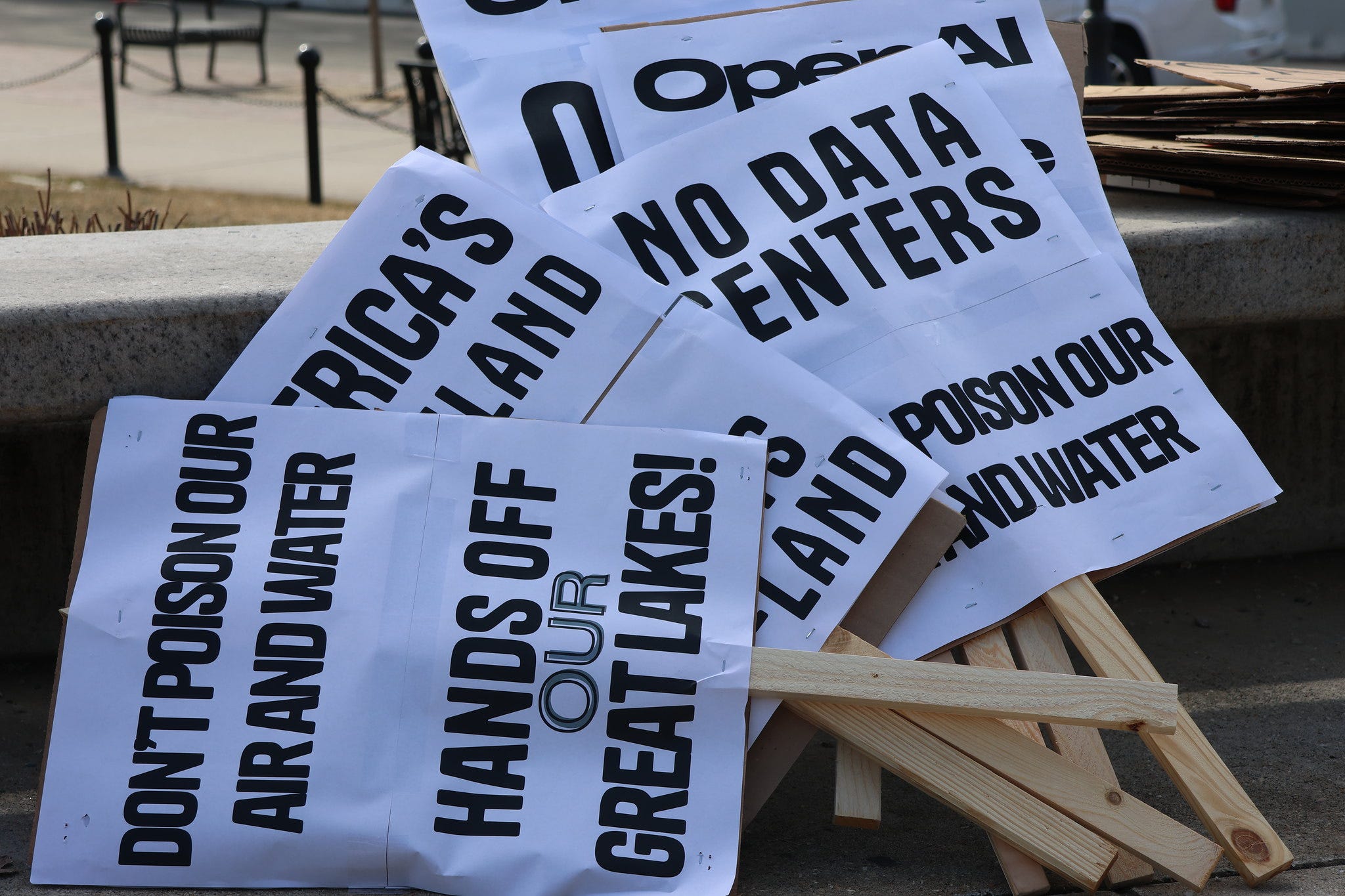
Yes, new data centers generate revenue for many communities, but so would other economic development projects that do a better job of promoting the needs of local businesses or workers. While the tech industry for a while successfully promoted data center development as an extension of Silicon Valley, that tactic has clearly run out of gas (due to it being false) and communities are now more likely to battle an impending data center project than welcome it.
A recent Politico poll, in fact, showed that 41 percent of Americans would oppose a data center being built within three miles of their home, while just 24 percent — less than a quarter — would be in support. With those kinds of numbers, politicians swinging against the direct subsidization of the industry makes perfect sense.
But there’s also a broader argument about the goals of economic development to be made here: The case for publicly subsidizing an industry — any industry — is that it provides something worth having in a particular place, something that is in the state’s, county’s, or municipality’s interest to incubate because it adds long-term economic value. That support should, in theory, be temporary, existing only long enough for the industry in question to build enough of a foundation that it can stand on its own and provide local benefits without being a permanent ward of the state.
That, quite obviously, has not happened with data centers (nor with most industries subsidized in the name of economic development). Even if you make the argument that the data center industry was worth supporting in its early days due to the high revenue potential, those days were many years, if not decades, ago. Virginia, the undisputed data center capital of the Earth, is still subsidizing data center construction through tax exemptions that were first enacted in 2008, and legislators in this year’s budget chose to continue that support.
If the industry can’t stand without subsidies in Virginia, which has a higher concentration of data centers than anywhere else on the planet, then where can it? What’s the point of fostering an industry that needs to be subsidized in perpetuity, other than lining the pockets of executives and lobbyists? And if the argument is that the industry is so transient that failure to continue subsidizing it will result in its departure, was it even worth fostering in the first place? No! It was not!
To be clear, most of the “pauses” and “bans” being implemented at the state level don’t get at the full extent of the problem, either because they don’t cover all of the various avenues through which data center developers or operators can claim tax breaks, including property tax abatements or other local exemptions, or because they don’t cover other ways in which the public subsidizes data centers, such as through discounted power or water. Many pauses also are not retroactive, so projects that were rushed into the application process before they took effect will still be able to claim money.
I’m also under no illusion that these governors and legislators are genuinely rethinking their stance on the effectiveness of corporate-focused economic development subsidies: They’re reacting to the political pressure they’re feeling from constituents. Industry-specific subsidies tend to go in waves, so even if a bunch of data center subsidies get washed away today, they can always come back in with the tide tomorrow.
Even with those caveats though, the momentum to eliminate data center subsidies is encouraging, as is the effort to slow down data center development more broadly in order to build out a broader regulatory framework for data centers and artificial intelligence. Data centers should be located where they provide tangible benefits to the community, not where they can engage in the most extraction, and eliminating the ability of the tech industry to claim tax handouts for building them is step one toward achieving that dynamic.
SHAMELESS SELF-PROMOTION: I was on NPR’s 1A last week, discussing subscription traps and junk fees. Listen here.
SIMPLY STATED: Here are links to a few stories that caught my eye this week.
Gov. Mikie Sherrill signed a law making New Jersey the second state with a statewide restriction on the use of algorithmic rent-setting platforms.
CalPrivacy, California’s privacy-focused agency, “launched its first-ever audit, looking into delivery and transportation apps’ compliance with state law.”
Your local Home Depot likely has a data file on you, and it may be riddled with errors.
In the last two decades, the re-election rate for incumbent governors has hit 95 percent.
The federal Government Accountability Office put out a misguided report on airlines.
A court ruling in Maryland will make it easier for monopoly utilities to claim state-based tax breaks.
Thanks for reading this edition of Boondoggle. If you liked it, please take a moment to click the little heart under the headline or below. And forward it to friends, family, or neighbors using the green buttons. Every click and share really helps.
If you don’t subscribe already and you’d like to sign up, just click below.
Thanks again!
— Pat Garofalo