
What the World Cup Explains About Our Price Dystopia
'Price' is increasingly meaningless in the digitized world.
This is Boondoggle, the newsletter about how corporations rip off our states, cities, and communities, and what we can do about it. If you’re not currently a subscriber, please click the green button below to sign up. Thanks!
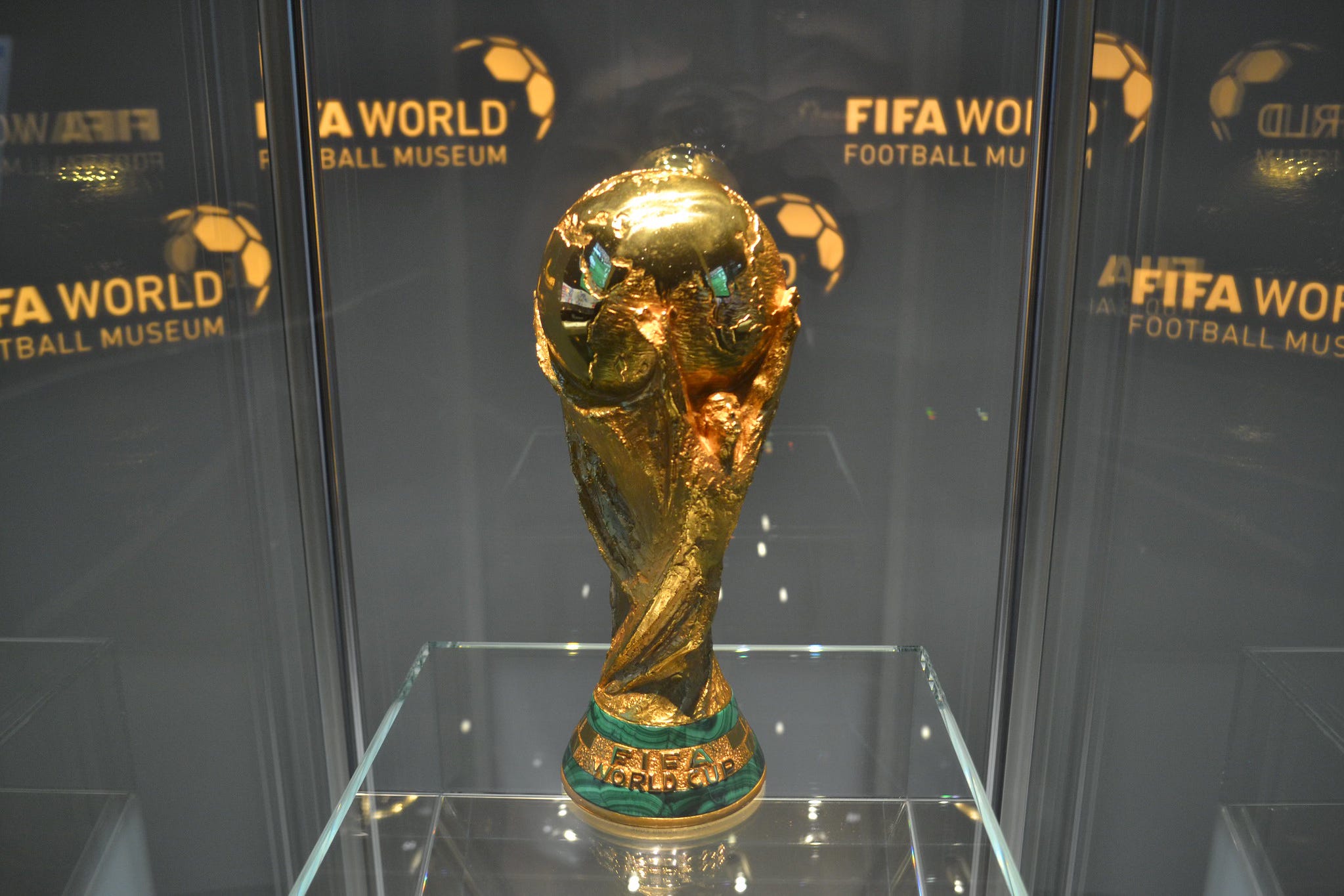
The World Cup — international soccer’s premier tournament and the world’s most popular sporting event — will be coming to North America in the summer of 2026, with the United States, Mexico, and Canada jointly sharing hosting duties. FIFA, international soccer’s governing body, recently announced that tickets to attend World Cup games next year would start at a cost of $60 for first-round matches, and be priced using dynamic pricing — meaning the cost isn’t actually going to be $60 in most instances, but will fluctuate in real-time thanks to some algorithm or formula attempting to capture supply and demand.
In response, the Democratic nominee for New York City mayor, Zohran Mamdani, is circulating a petition calling for an end to dynamic pricing, a price cap on re-sold tickets (to avoid gigantic markups by scalpers) and for tickets to be set aside for New Yorkers to attend the games taking place nearby. (As someone who grew up in New Jersey, I hasten to point out that “New York’s” World Cup games will actually be held at MetLife Stadium, located in the Garden State.)
Mamdani’s play elicited the usual chorus of praise and indignation typical of any high-profile political campaign, and I’m certainly in no position to prognosticate on whether it was a clever election season tactic or not.
But that Mamdani and his team believe it might be politically useful to weigh in on World Cup ticket prices generally, and dynamic pricing in particular, is indicative of the reality that we are increasingly living in a price dystopia, one that is going to require legislative action to correct.
One of the bedrock principles of the market-based economic system we employ is that price discovery — the process by which buyers and sellers collectively land on a price — is necessary for it to function properly. Consumers assess a price, decide if it’s fair, perhaps shop around for something of lower price or higher quality, thus arriving at their ideal purchase and providing feedback to and disciplining sellers. Sellers price based on their input costs, desired profit, and ultimately will survive or not based on their ability to successfully strike the balance between that profit and the price consumers are willing to pay. And around and around we go.
But that textbook nicety is not how it actually works in many contexts, particularly when shopping online. Instead, there is no common understanding of what a price is, or expectation that prices will be consistent between shoppers or over even short periods of time. Instead, prices fluctuate wildly, constantly, for reasons unknowable to the consumer.
Dynamic pricing is one variant of this. It has been most newsworthy in the live events industry, angering hordes of Beyonce and Oasis fans, for instance. Indeed, the idea that a certain ticket for a certain seat costs a certain amount, comparable to other similar seats, and that a better view will be more expensive and a nosebleed section cheaper, is a quant idealized version of shopping that has been left in the past by today’s live events behemoths. Now, prices are all over, rollercoastering around, causing costs to skyrocket (and occasionally plummet) unpredictably for the largest events.
But dynamic pricing’s reach is wider than that, as it is used at theme parks, airlines, hotels, large retailers, and who knows where else, eliminating the possibility of a static, predictable price that makes budgeting and price comparisons possible. Many if not all of us have surely experienced the phenomenon of looking up airline ticket prices, doing some budgeting, mulling hotel options, only to return the next day to an entirely different price for the same flights for completely indiscernible reasons.
And that’s not the end, as dynamic pricing has many cousins, among them:
Surge pricing, which is large, nearly instantaneous jumps in price due ostensibly to high demand (which I think often tip-toes dangerously close to our traditional notion of price gouging, or the practice of exploiting market disruptions to jack up prices);
Surveillance pricing, which is the use of individualized data to offer different prices to different consumers for the same good;
And junk fees, those ubiquitous, undisclosed mandatory fees for “service” and “processing” that pay for neither service nor processing and can’t be avoided.
I’m not even getting into the ability of firms to use algorithms to engage in price collusion, fixing prices higher than they would be in a free and fair market, another pernicious tactic that falls slightly outside the scope of what I’m discussing here.
All of these pricing techniques move the economy away from the idea of a predictable price that consumers can assess, budget for, and recommend to their friends, family, and neighbors to one based on in-the-moment, personalized prices that are not consistent across time, product, or type of consumer, rendering comparison shopping or long-term budgeting functionally impossible. How can a consumer budget if the price of whatever they want to buy is simply unknowable ahead of time and may be different again tomorrow, or even 10 minutes from now?
The result is an economy rigged in favor of the corporations that most aggressively employ these tactics (which are going to be, most of the time, the large dominant ones that can afford the latest data-analytics tools and the fancy computer equipment to run them, and have the largest data sets), allowing them to relentlessly disguise price hikes and drive prices up without facing the discipline of a functional marketplace.
This may not be the biggest deal when it comes to World Cup tickets, which are a luxury item. But it matters a lot if applied to items such as food, clothing, and housing — plus, the idea that everyone but the wealthy should be algorithmically priced out of major cultural events or tourist destinations, I also find generally problematic for society, because it’s those events and experiences that connect us across class and ideology.
There have already been steps by lawmakers to address some of the problems I’ve discussed — several states in the last two years have banned undisclosed mandatory fees, and legislators at both the federal and state level are attempting to rein in individualized pricing based on data collected via online surveillance — and polling shows that voters would certainly appreciate more of these kind of efforts.
So I think Mamdani is tapping into something that New York voters (and New Jerseyans too) will understand and appreciate, and if it takes starting with World Cup tickets to get us to a world without constant pricing games, I’m all for it.
SIMPLY STATED: Here are links to a few stories that caught my eye this week.
The California legislature passed a groundbreaking bill making it illegal for a corporation to “coerce” another into setting a particular price for similar products via algorithm. It now goes to Gov. Gavin Newsom for his signature or veto.
Ohio regulators, over the objection of big tech firms such as Amazon and Google, approved new rules allowing electric utilities to charge data center owners higher rates, and a similar plan is advancing in Kansas.
A new report from Reinvent Albany and Good Jobs First shows corporate tax breaks siphoning much more funding from New York public schools than previous estimates.
Michigan Democrats are calling for a utility ratepayer bill of rights, and Rhode Island State Rep. David Morales is working on legislation to cap the profits monopoly utilities can claim from delivery services.
Thanks for reading this edition of Boondoggle. If you liked it, please take a moment to click the little heart under the headline or below. And forward it to friends, family, or neighbors using the green buttons. Every click and share really helps.
If you don’t subscribe already and you’d like to sign up, just click below.
Thanks again!
— Pat Garofalo