
This is Boondoggle, the newsletter about how corporations rip off our states, cities, and communities, and what we can do about it. If you’re not currently a subscriber, please click the green button below to sign up. Thanks!
In 2018, when Amazon went through its much ballyhooed public search for a “second headquarters,” states and cities across the country pledged billions of public dollars to the retail giant if it placed its “HQ2” within their borders. Amazon aggressively used nondisclosure agreements to keep the details of those bids under wraps, requiring that they be signed by elected leaders, economic development officials, and even servers at restaurants where political elites and corporate rent-seekers went to discuss potential deals.
Those nondisclosure agreements, or NDAs for short, prevented public officials (and bartenders, I guess) from divulging what sort of public resources, in the form of tax breaks, regulatory relief, or other freebies, were being offered to one of the most profitable private businesses in all of human history, in exchange for a new office building.
In the wake of that economic development debacle — which ended with HQ2 being chased out of New York and never really materializing in Virginia either — there was a brief moment during which it looked like some states might eliminate the use of NDAs in corporate subsidy deals. New York even passed a ban through the State Senate multiple times.
Alas, none of the proposed bans ever got over the finish line, allowing their use to continue, unabated, in subsidy deals for everything from new auto manufacturing plants to retail warehouses to chip foundries.
But what wasn’t accomplished then is starting to be accomplished now, thanks to the proliferation of one thing: Data centers. Not only have some governors already used their executive power to ban NDAs in data center deals, but the political environment is such that there is an opportunity to make some of those bans permanent.
To date, four Democratic governors — Virginia’s Abigail Spanberger, Pennsylvania’s Josh Shapiro, Massachusetts’ Maura Healey, and Maryland’s Wes Moore — have banned executive agencies from signing NDAs with data center developers, while Illinois Gov. JB Pritzker has called for legislation to do the same. Delaware Gov. Matt Mayer signed a ban on NDAs for “large scale” data center projects into law just a couple of weeks ago.
A bipartisan group of gubernatorial candidates has also made banning data center NDAs a campaign pledge, such as Wisconsin Republican Tom Tiffany, New Mexico Democrat Deb Haaland, and Ohio Democrat Amy Acton. (I’m sure I missed some, so flag them in the comments and I’ll update the list!) And state legislators in a wide array of states proposed to ban their use legislatively, including in Minnesota, New Jersey, Oklahoma, and Maryland.
Data center NDAs have also become a campaign issue in local and federal races across the country, with incumbents rushing to try to justify or excuse their use and challengers making a stink about them, resulting in some sitting elected leaders losing their jobs (with surely more to follow in November).
The critics of NDAs, to be clear, are correct in two important ways: First, nondisclosure agreements in economic development deals are corrupt, meant to explicitly exclude community members from key decisions until it is too late to make a difference. They’re employed by dominant corporations against overwhelmed and under-resourced state and local officials to keep key decision-making moments out of the public light and to turn unpopular projects into a fait accompli.
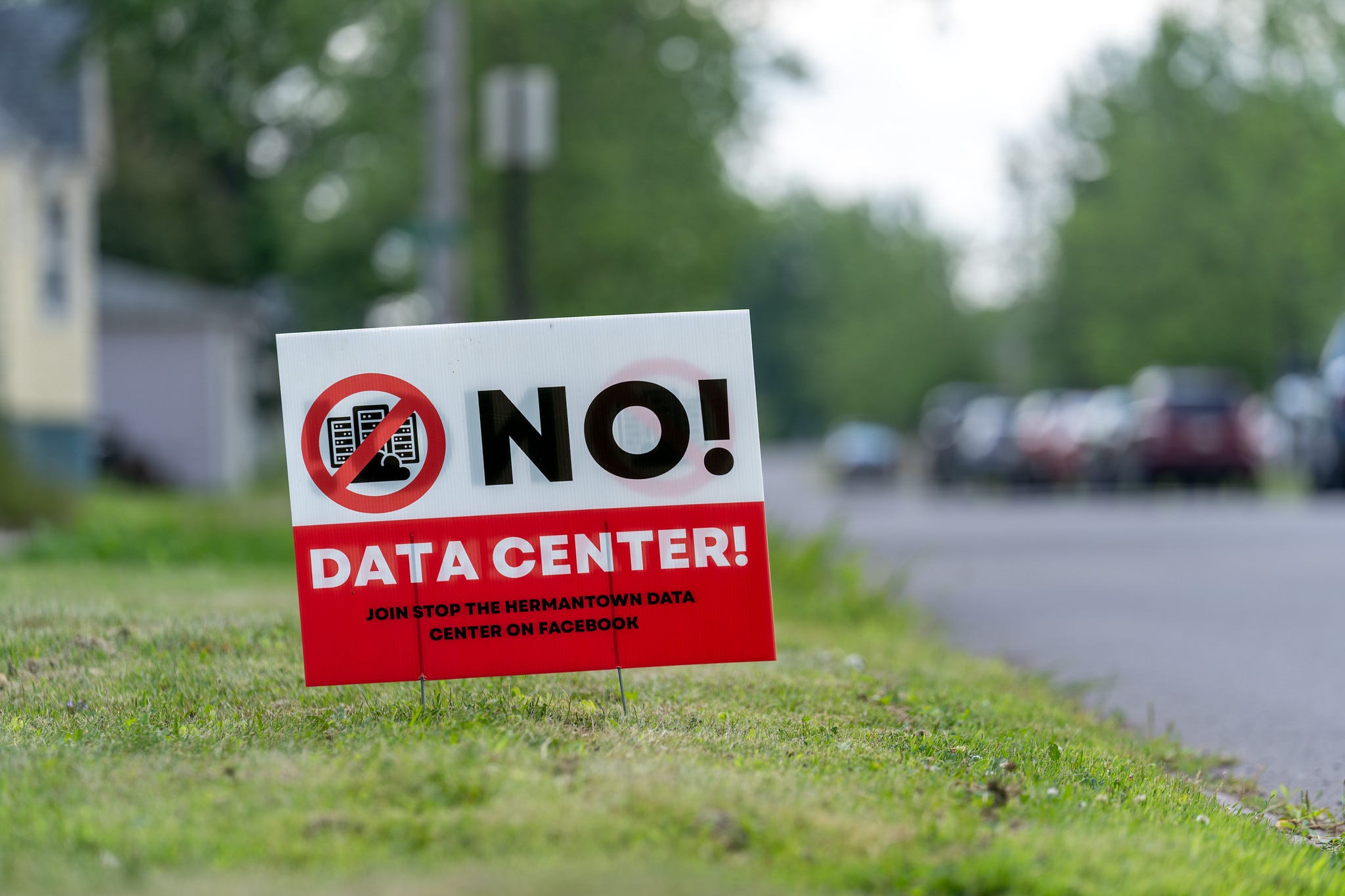
Second, these NDAs are being employed in service of one of the worst “economic development” tools out there in the form of data centers, which create few permanent jobs, no broader economic development effects, and come with significant, visible downsides in the form of higher potential utility costs and environmental degradation.
So why did this set of economic development projects trigger a backlash when so many before it — benefitting large, venal corporate executives — failed to do so? My theory is that data centers, in addition to the concrete negative effects they specifically cause, have also come to symbolize broader anxieties around the effects of artificial intelligence and the power and hubris of dominant tech firms, creating a public policy toxicity that focused voters and community members not just on the project at hand, but on the entire, corrupt economic development process as it currently exists.
Data centers bring into residents’ backyards, in a very visceral way, the engine powering the tools that are meant to eliminate their jobs, raise their prices, addict their kids, and bury them in deepfake slop. The sentiment against NDAs flows from the obvious distaste for the end result — a noisy, ugly box on your street that’s meant to put you out of work — to the process that led to that outcome, a process that is obviously, blatantly corrupt, since elected leaders are literally signing away their ability and responsibility to communicate with their constituents.
One of the supposed maxims of politics is that talking about process means you’re losing. But in this case, normal people understand why specific process points lead to results they despise. Their anger at data centers has achieved the dream of people like me who want to change the way economic development is practiced in the U.S.: It flipped the political incentive such that being against the project, and excoriating the process, is more politically beneficial than being for it. Politicians are concluding that there are more votes in being anti-data center than in being pro-.
The media, broadly anyway, has also seized on NDAs around data centers as an issue in a way it hasn’t with any other project. I’m not quite sure why this occurred, but it’s definitely helped bolster the narrative that tech firms are deliberately hiding projects from local residents.
My one quibble with all this promising action is that it’s solely focused on data centers, when NDAs in other projects are just as harmful. In a perfect policy world, bans would be applied to the tactic, period. After all, if it’s harmful to block a community from knowing about a data center project, it’s equally harmful to block them from knowing about any large-scale proposed economic development project that involves public resources and broad, downstream effects for residents.
And before a bunch of folks complain and call me a NIMBY sympathizer (the shorthand for “not in my backyard” that gets applied pejoratively to those who seek to block a host of different projects, from affordable housing to road construction), what I’m asking for here is clear lines of communication between government and the public, not additional veto points. If a project can’t be justified in an open, transparent process, then it’s not deserving of public support or elite approval, whatever it is.
So I’m thrilled that NDAs are being banned in data center deals, but I hope some elected leaders have the intellectual honesty to take that move to its correct conclusion and push to ban them across economic development projects writ large. The opportunity is there for anyone willing to grab it.
SHAMELESS SELF-PROMOTION: I spoke to the Rochester Democrat and Chronicle about all the issues surrounding the new, taxpayer-subsidized Buffalo Bills stadium. Read it here.
SIMPLY STATED: Here are links to a few stories that caught my eye this week.
State legislators are preparing a “fresh wave” of AI safety bills, in anticipation of federal inaction.
Bass Pro Shops’ taxpayer-funded grift just keeps on grifting. (Background on this issue here.)
12 state attorneys general, led by California’s Rob Bonta, agreed to a “devastating” settlement that will allow Paramount and Warner Bros. to merge.
Syracuse auditor Alexander Marion released an analysis showing how Syracuse University’s tax-exempt status is undermining city services.
Thanks for reading this edition of Boondoggle. If you liked it, please take a moment to click the little heart under the headline or below. And forward it to friends, family, or neighbors using the green buttons. Every click and share really helps.
If you don’t subscribe already and you’d like to sign up, just click below.
Thanks again!
— Pat Garofalo
Yes, and NDA's should be banned when any government money is involved. Of course, it's more difficult to legislate what New York governor Kathy Hochul did to pass the Bills grift.
She introduced that legislation at the last minute then twisted arms to get it passed. It's common in the stadium welfare scheme as the website "Field of Schemes rails against on a daily basis. Many such cases!